A Good Day

It started from 6pm the evening before my birthday. My phone rang for the two separate messages from mom and dad: “Happy birthday!” Of course, it was already my birthday, China time. I called mom right away to video chat. For the 76th time, she told me about the day she birthed me. She was in the hospital for one night and one day with contraction but no progress. Just before 8pm the second day, the next shift doctor showed up, surprised: “You are still here. Let me help you!” “She was really pretty, that doctor!”, mom never forgot to add that detail. Tools were quickly gathered and a C-section was performed. I was born.

Mom never tires of telling me about that day. I never tire of hearing the same story. It only got better after I gave birth twice myself. We started comparing our experiences and connecting to each other in a new way. The night I had Kate through a C-section, my parents came to the hospital to see me and the newborn. Mom walked in, came straight to my bed, and hugged me: “That is so much suffering my kid.”

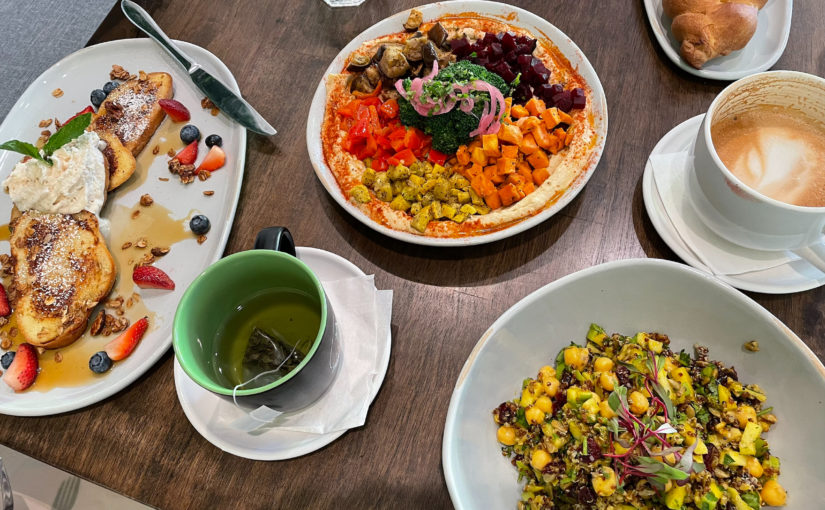
My birthday started with me taking the kids to their swimming lesson. Chris and I went to brunch at a Mediterranean restaurant and then a stroll in a park nearby. I no longer use the word “best friend” as an adult, but our easy conversation made me think of that term. After 11 years of marriage and 2 kids, we still long for time together, whether it is grabbing lunch from a taco truck on a work day, browsing through houses on Zillow while praising the one we live in, or watching one episode of Seinfeld after putting the kids down. It makes me happy to have a spouse who happens to be a great friend.

I had one hour to myself in the afternoon before taking Kate to her tennis lesson. After learning that many Chinese books are available on Kindle, I downloaded one novel and added two classics to my reading list. Those books were the ones I always thought: “One day, I will read them.” When that thought was turned into a tangible plan, I was liberated.

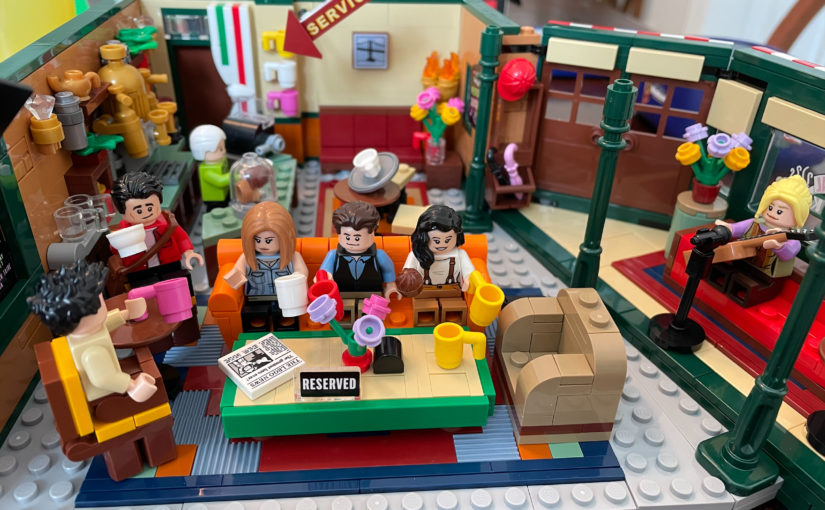
More than once in the past, I cried on my birthday about disappointing gifts. It probably reflected more poorly on me than on the gift giver. Over time, gifting in our family has evolved from a guessing game to hint dropping and then to clear pointing. I knew what I was getting this year, either a Thor’s hammer Lego set or a Transformer Lego set. They are my favorite worlds combined. My passion for Lego and Marvel movies is a puzzle to some, but I know they are just a continuation of my childhood favorites: 雪花积木(snowflake toy brick) and 圣斗士星矢(Saint Seiya: Legend of Sanctuary). I used to spend hours building butcher stores, playgrounds, and living room furniture with snowflake-shaped bricks as a child. Recreating the world in a miniature form brings me endless fun. Followed by Ninja Turtles and Transformers, Saint Seiya was my favorite show in childhood. It is about a group of teenage warriors wearing a sets of sacred armors and fighting against evil. The Avengers are the grown up version of those saints, plus they fight on a larger scale. In the “End Game”, Captain America had a line: “Avengers! Assemble!” I jumped to my feet and cheered.

The evening went by with the presence of good friends and one slice of strawberry whipped cream Japanese-style cake. At night, when I laid my head on the pillow, gratefulness and contentment filled my heart. I thought to myself, it was a good day.

Weeds

I never pictured myself pulling weeds tirelessly in a squatting position on a hot summer day. That is because first, Chinese hate sun. The sun umbrella is one of our greatest inventions. Second, I knew nothing about gardening growing up. I had to Google “what is the difference between perennials and annuals?” When Aisela gave me an introductory lecture on plants, she started with: “Look, this one is a tree.”

Our family decided to plant some flowers and vegetables last year. We started with snapdragons, marigolds, sunflowers, strawberries and herbs. Since then, we found ourselves spending much more time outside, to water the plants, to check on the ripening fruit, to cut some basil for my chicken dish, or to simply enjoy a cold drink in that space. Summer days became fun and fruitful. It was a fairy tale until the villain showed up: the weeds.

Weeds are easy to deal with when they are small and when the roots are weak. But if neglected for a while, weeds will overgrow and choke all the desirable plants in the area. After a month of vacation last July, I came home to a garden bed with an excessive amount of weeds. Instead of changing and unpacking, I looked for my garden gloves and started weeding. Not only did I voluntarily put myself to hard work in the sun, to my surprise, I did it with great joy and satisfaction. My desire to kill weeds is proportional to my love for my plants.

Is that how God sees sin? He loves us too much to allow sin. If allowed, sin will deepen its roots, grow its leaves, and eventually take over.  Only when sin is dealt with promptly, can we grow freely.  I am fortunate to have God as my loving and relentless gardener.

May

The first month of my journey was pretty eventful: family visited from out of town, our nanny was gone for two weeks, we took David to the ER for stitches (just 3 months after the last trip), Kate caught a cold and it passed through the whole family. It was also a transitional period. Kate finished school and hugged goodbye to her friends. We moved out of the house for a few days to have the basement asbestos tiles removed.  The heavy use of sunscreen announced the impending arrival of summer, along with its humidity.

Given the unexpected sickness and loss of childcare, I had to take two weeks off from research. During the days I felt so miserable with a sore throat, I was in pure survival mode: nap, eat, Lego, and repeat. At least, I was not utterly unproductive.

Progress report:

Research: I started an empirical project on how the type of childcare affects development in early childhood. I will be using a restricted dataset that follows more than 6,000 kids from birth to kindergarten. So far, I read through the data manual and files, picked and cleaned the needed data, ran some preliminary regressions, had a meeting with a colleague who is an expert in empirical work, and formed a clear direction for the paper.

French: As we wrap up the French book we studied for a year and half, Aisela and I are switching to Coffee Break French. This is a great podcast for language learning. We have listened to the first 2 seasons (free version) already, and now purchased the member version of season 3 for its texts and more comprehensive lecture material. So far, I studied the first two episodes and have most of the texts memorized.

Reading: 3 books finished: All Creatures Great and Small; Mere Christianity; The Hitchhiker’s Guide to the Galaxy. They can’t be more different from each other. The first book is wholesome and pure. It puts a smile on your face, and you get quite a few good laughs. The last book is so odd in a good way. It reminds me of my teenage years when I was so into Sci-Fi stories that I even wrote one myself. My favorite out of the three books has to be C. S. Lewis’ Mere Christianity. I was simply blown away by his intellect. In this book, he broke down some hard concepts in Christianity into pieces that are so easy to understand and apply in life. He did it with clear logic and clean writing. He did it with an ease that  almost makes you think it is easy to do. I know I will be reading more of his work. 

Interior Solution

More than once I have been asked: “do you still have your babysitter come in the summer (when you don’t have classes)”? I always answer: “yes”, and quickly add, “I have to work on research.”

That answer is half true. The truthful part is I do spend quite a bit of time working on projects in the summer. The part that I tend not to reveal is that I also read, study French, go on lunch dates with Chris, and do Chinese grocery shopping when the babysitter is playing with my children. Part of me feels guilty. Shouldn’t I maximize my time with children, instead of pursuing leisure? Part of me feels wasteful. Shouldn’t I be a better saver by cutting unnecessary childcare expenses?

Child care, like cleaning, cooking, and elder care, can be seen as a form of home production. The work can be done by household members or by purchasing the service in the market. In my working paper, “Elder Care in an Aging Population: The Impact of Parental Care Needs on Adult Children“, I write: “In the standard home production models, the cost and preference to substitute home production with purchased services determine household consumption and time allocation decisions.”

The cost part is easy. If someone’s opportunity cost of time (usually measured by wage) is greater than the price of the service, she is more likely to outsource the work. That is why statistically, higher-wage mothers tend to work more and buy more child care. The preference part is tricky. How much time do you enjoy spending with your children, versus the next best alternative? I admire Emily Oster’s honesty in her answer. She writes in her book “Cribsheet”: “I’ve figured out that my happiness-maximizing allocation is something like eight hours of work and three hours of kids a day.” Even I, as a working mother, find that answer baffling, and almost cruel. But I don’t think I am too far from that. I love my children, but I don’t love spending all my time with them. I find myself much happier if I get away for a few hours.  In fact, I’m greatly enjoying one such break from them as I type these words.  I usually return refreshed and ready to play.

I don’t feel guilty about my preference. I do wonder if I am too selfish by acting on it. Somehow as soon as I became a parent, I felt this internal and external pressure to prioritize my children. Many times, my own needs and wants yield to theirs. But what is the guilt-free balanced point in these tradeoffs? There are numerous books on how to raise a happy child. Not a single one on how to become a happy parent. Do we still even matter?

In choosing between two goods/activities for utility maximization, if someone chooses all of one good and none of the other, economists call it a “corner solution”. Stay-at-home moms and full time working moms are both examples of this. If the chosen outcome is a combination of both goods, we call it an “interior solution”. I am grateful that my field allows me to choose such a solution.  I move my work around (such as grading in the evenings and research in the summer) so that I am away from children about 20 hours a week. In the summer, “work” often takes the form of reading, learning, and recharging. These things make me a happier and more relaxed person — at the cost of my less engaging parenting hours.  That’s a tradeoff I need not feel sheepish about.